Information Communication Technology (Theory) — July 2024
KNEC Craft Certificate in Sales and Marketing — Module I. Paper code: 1902/104A
Attempt the questions before reading the answers. These are independent revision answers, not official KNEC marking schemes. All printed questions are answered for revision, including any optional questions.
Question 1(a)
(a) State four types of number formats that may be applied to worksheet cells to control the way data is displayed.
(2 marks)
Answer
- Number.
- Currency.
- Percentage.
- Scientific notation.
Question 1(b)
(b) State four statistical functions that are used to perform computations in spreadsheet programs.
(2 marks)
Answer
- AVERAGE: calculates the arithmetic mean.
- COUNT: counts cells containing numbers.
- MAX: returns the largest value.
- MIN: returns the smallest value.
Question 2(a)
Explain each of the following computer mouse techniques: (a) drag and drop;
(2 marks)
Answer
Point to an item, press and hold the main mouse button, move the pointer to the required destination, and release the button to place or move the item there.
Question 2(b)
Explain each of the following computer mouse techniques: (b) right-click.
(2 marks)
Answer
Press and release the secondary mouse button, usually the right button, over an item or area to display a context menu of commands relevant to that item.
Question 3(a)
Explain each of the following file organization methods in a computer: (a) indexed;
(2 marks)
Answer
Records are stored with an accompanying index that maps search keys to their storage locations. The system consults the index to locate a required record without reading every preceding record.
Question 3(b)
Explain each of the following file organization methods in a computer: (b) sequential.
(2 marks)
Answer
Records are arranged in a defined sequence, commonly by a key such as account number, and are processed in that order. Reaching a particular record generally requires reading through the sequence until the record is found.
A group of students working on the same document used the following features in a word processor:
Question 4(a)
(a) track changes; Explain one benefit the students would gain from using each of the features.
(2 marks)
Answer
Track changes records proposed insertions, deletions and other revisions, usually with the contributor’s identity. The group can review what changed and accept or reject individual edits before producing the final document.
Question 4(b)
(b) comments. Explain one benefit the students would gain from using each of the features.
(2 marks)
Answer
Comments let students attach questions, explanations or feedback to a particular part of the document without changing the main text. This helps the group discuss and resolve issues while collaborating.
Question 5
An organization has installed an e-mail software for its operations. Outline four items in the header component of this software.
(4 marks)
Answer
- From: the sender’s address.
- To: the main recipient’s address.
- Subject: a short description of the message.
- Date: when the message was sent.
Question 6
Differentiate between multitasking and multiprogramming operating system in a computer.
(4 marks)
Answer
| Multitasking | Multiprogramming |
|---|---|
| Shares processor time among tasks using rapid switching so that users can interact with several tasks and experience them as running together. | Keeps several programs in memory and runs another when the current program waits, for example for input/output, to improve processor use. |
| Emphasises responsiveness and regular time sharing between tasks. | Emphasises keeping the CPU busy rather than leaving it idle during a program’s wait. |
The concepts overlap: a multitasking system can also use multiprogramming. They do not require a separate physical processor for every task.
Question 7(a)
(a) State four types of malwares threat an organization’s data may be exposed to when connecting its operations to the internet.
(2 marks)
Answer
- Computer viruses.
- Worms.
- Trojan horses.
- Spyware.
Question 7(b)
(b) State the method of data processing that may be applied in each of the following cases: (i) generating bills for an inpatient at the point of discharge; (ii) communication with pilots; (iii) computation of casual workers’ wages at the end of the week; (iv) live streaming services.
(2 marks)
Answer
| Case | Processing method | Reason |
|---|---|---|
| (i) Discharge bill | Online / interactive processing | The connected system retrieves and processes the patient’s accumulated charges when the bill is requested. |
| (ii) Communication with pilots | Real-time processing | Information must be processed and communicated within a strict, timely response requirement. |
| (iii) Weekly casual wages | Batch processing | Accumulated records are processed together at the scheduled end of the week. |
| (iv) Live streaming | Real-time processing | Incoming audio/video data is processed continuously for immediate delivery rather than waiting for a later batch. |
Question 8
An organization intends to acquire a printer for use in its operations. Explain two factors other than cost that should be considered to ensure the printer meets the needs of the organization.
(4 marks)
Answer
- Required output quality and type: the resolution, colour capability and supported paper sizes must suit the organisation’s documents, images or specialist forms.
- Workload and speed: printing speed, duty cycle and paper capacity should meet the expected volume without long queues or excessive wear.
Question 9
Explain two benefits that a company offering tourism services may gain from connecting to the internet.
(4 marks)
Answer
- Wider marketing reach: a website and online communication can present tours and accommodation information to potential customers in different countries at any time.
- Faster reservations and customer service: online enquiries, booking systems and electronic communication allow the company to confirm arrangements and respond to clients promptly.
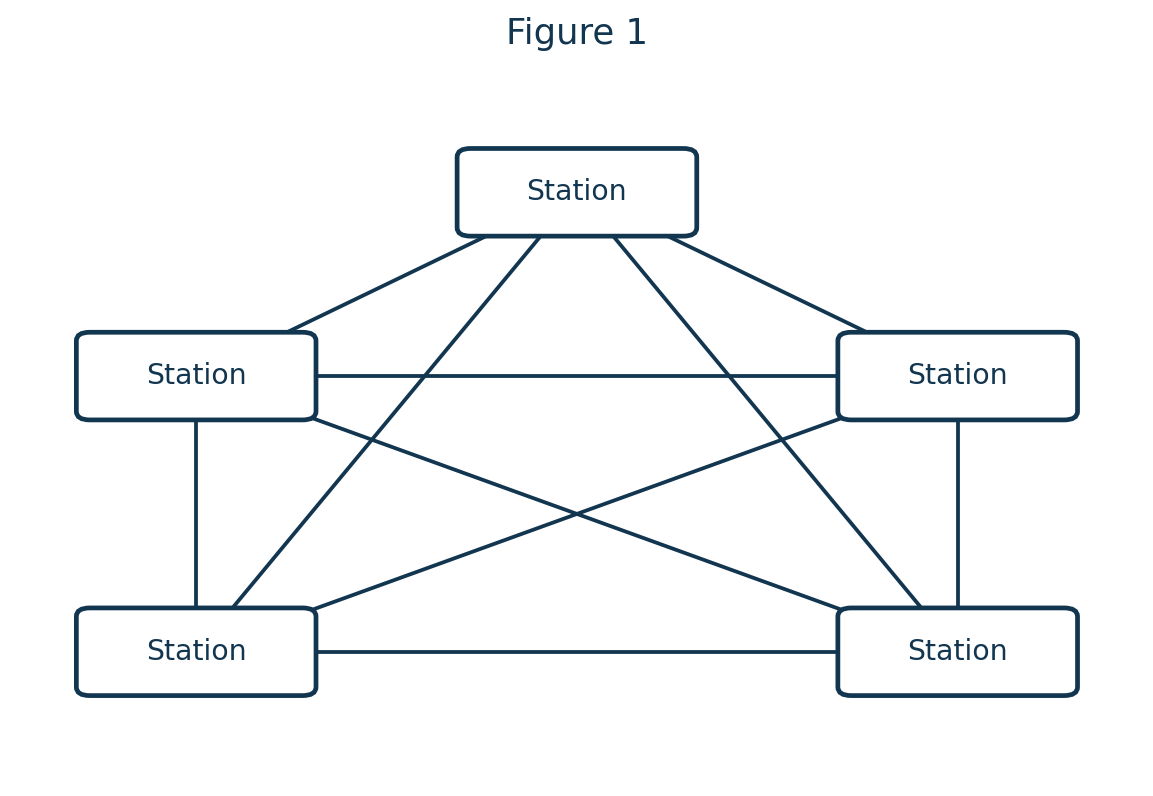
Figure 1 shows a computer network topology a college used for its computer connectivity. Use it to answer the question that follows:
Question 10(a)
(a) Identify the type of network topology in Figure 1.
(1 marks)
Answer
Full mesh topology: each station has a direct connection to every other station.
Question 10(b)
(b) Outline three advantages of the topology.
(3 marks)
Answer
- Alternative routes provide resilience: failure of one link need not disconnect the rest of the network.
- Dedicated links reduce competition for a shared communication channel and can support simultaneous transmissions.
- Faults can be isolated to particular links, making the failed connection easier to identify without stopping all communication.